


Permit Set vs Full Architectural Services: What’s the Difference?
Updated: Apr 17
I’ve been wanting to talk about this for a while, and a recent conversation reminded me how misunderstood this topic is and how it can shape a client's experience during construction.
There are different types of architectural services available depending on the needs of a project. Choosing the right services for your project can shape your overall experience.
I want to briefly explain the overall design process before we dive into the different architectural services:
The Schematic Design (SD) phase is energizing for most clients, as they get to see their ideas taking shape on paper and start visualizing what their building will look like. Once the design is finalized, the project moves into the more technical phases: Design Development (DD) and Construction Documents (CD).
In Design Development, the architect works through how the building will come together and makes key decisions (structure, systems, and selections), often in collaboration with consultants as needed. During Construction Documents, the drawings are finalized for permitting and construction.
The phase that most clients find most challenging is what comes after permitting: the construction phase. While construction can be stressful at times, building your first home or your new office is an exciting milestone and shouldn’t feel overwhelming.
One thing that shapes the different architectural services is the level of detail explored and provided during the SD, DD, and CD phases. Today, I want to focus on two types of architectural services that are often misunderstood:
a permit set and a more comprehensive architectural service.
What is a Permit Set?
A permit set is typically focused on meeting the minimum requirements for approvals.
It provides the drawings needed for a building department to review and issue a permit.
In many cases, it can be a practical starting point, especially for those familiar with the construction process. But it’s important to understand:
👉 a permit set is not intended to fully resolve all design decisions.
What Happens After the Permit Set?
With a more limited set of drawings, many decisions move into the construction process.
That means:
• selections are made while the project is being built
• coordination happens in real time
• problem-solving happens on site
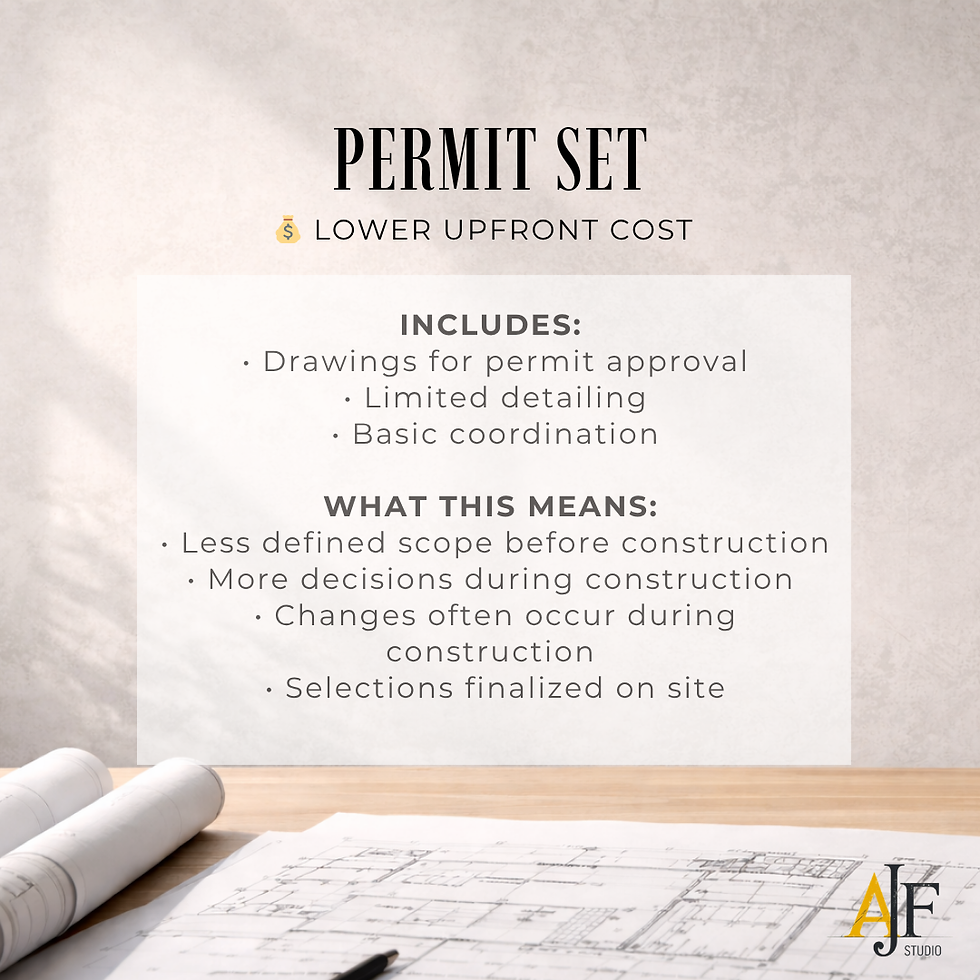
At that stage, changes are no longer just lines on paper. They affect multiple systems, trades, and materials, and are often more complex and more costly to adjust.
This is not necessarily a flaw in the process, but it does shift a significant amount of responsibility into the construction phase and onto the owner.
Because of the number of moving parts involved, this can become overwhelming and can also impact the overall budget and construction timeframe.
What is a Full Architectural Service?
A more comprehensive architectural approach goes beyond permitting.
It includes developing the design further, more extensive coordination with consultants, and resolving many decisions before the permit is received and construction begins.
This creates:
👉 clearer, more developed drawings
👉 better coordination between disciplines
👉 more informed decisions earlier in the process
The owner becomes more involved in key decisions while the project is still in the design phase, ranging from spatial planning and layout to systems, materials, and overall coordination.
This allows decisions to be made with a clearer understanding of how the building comes together as a whole, without the pressure of construction timelines.

Why Do Decisions Earlier Matter?
One of the biggest advantages of a more developed set of drawings is this:
changes happen on paper
Adjusting a layout, moving elements, or refining selections is typically more straightforward and more cost-effective during the design phase.
It’s important to note that changes during construction are possible (most of the time). However, if framing, plumbing, electrical, or other systems have already been installed, making changes becomes more complex and will add cost and time.
Choosing What’s Right for Your Project
Many projects begin with a permit set, often driven by the goal of reducing upfront costs.
While this approach can work in certain situations, it can also shift more responsibility, decision-making, and coordination into the construction phase.
For those who are less familiar with the building process, this can lead to a more stressful experience simply because of the number of decisions that need to be made in real time.
A more comprehensive architectural approach allows many of these decisions to be explored earlier, which can create a clearer process and help reduce uncertainty as the project moves into construction.
Neither approach is right or wrong.
The goal is not to recommend one over the other, but to make the difference clear.
Just like a menu, each option includes a different level of preparation, coordination, and involvement. Understanding what is included helps set expectations and allows for a more intentional decision.

Making an Informed Choice
Having a clearer understanding upfront can make a significant difference, not only in the outcome of a project, but in how the process feels along the way.
Helping clients understand their choices so they can make an informed decision that works for their project should be the goal of any great collaboration.
Comments